
The family of Louisa Gag, the Boston transportation planner who was struck and killed by a truck while biking in July, is joining state lawmakers and safety advocates to push a bill in her name that would target speeding, distracted driving and dangerous trucks.
State Reps. Rob Consalvo, a Hyde Park Democrat, and Steve Owens, a Watertown Democrat, plan to file the “Louisa Law” at the start of the Legislature’s next session in January, The Boston Globe reported. The proposal was announced Friday, Nov. 13, ahead of the World Day of Remembrance for Road Traffic Victims, which falls on Sunday.
“This bill is by and for Louisa,” Gag’s family said in a statement. “She will never have the opportunity to finish the work she started. We are calling on lawmakers to take action on this long overdue legislation so that no other family suffers the unbearable loss we have.”
What the bill would do
The proposal combines several earlier bills and ideas that Gag worked on as an advocate, according to WBUR and Streetsblog Massachusetts. It has three main parts.
Speed and red-light cameras. The bill would let communities use automated cameras to ticket drivers who speed or run red lights. Massachusetts does not allow that now, though 19 states do, WBUR reported. Gag worked on a 2020 version of the camera bill, WCVB reported. Supporters say the cameras would capture only license plates and that the bill would include safeguards meant to ensure the cameras are used equitably, according to WBUR.
Video streaming behind the wheel. The state’s hands-free law, passed in 2019, bars drivers from holding phones and other devices, but it does not specifically ban streaming video, live broadcasting or video calls while driving, WBUR reported. The bill would close that gap. A similar proposal was shelved this year, though top members of Gov. Maura Healey’s administration have signaled support, according to WBUR.
Truck safety equipment. Trucks owned by cities and towns would have to carry convex mirrors, backup cameras and side guards. The bill would also offer resources to help communities retrofit their fleets and set timelines for compliance, GBH and Streetsblog reported.
Building on existing rules
Some of these ideas already exist on a smaller scale. Boston passed the nation’s first truck side guard ordinance in 2014, covering large city-owned and city-contracted vehicles, and the state requires similar equipment on trucks and trailers it buys or contracts, the Globe reported. The new bill would extend the requirements to trucks owned by every Massachusetts city and town.
“The more trucks that have these safety measures, the better it is,” Owens told the Globe. “That’s one fewer truck that is dangerous in that way.”
Speed cameras may move sooner. The state Senate included a provision allowing them in a broad economic development bill, but that package has been tied up in House and Senate negotiations for months, and it is unclear whether the camera language will survive before the current session ends in January, the Globe reported. Healey has proposed allowing speed cameras in construction and school zones in her last two budgets, and lawmakers last session approved cameras to fine drivers who pass stopped school buses, according to WBUR.
Who Louisa Gag was
Gag, 36, worked for the Boston Transportation Department, where she helped expand the city’s bike share network and supported traffic calming projects, according to WBUR and the Globe. Before that she spent five years with the Cambridge-based LivableStreets Alliance, the Globe reported. In 2017, she co-wrote the group’s plan to help cities eliminate traffic deaths and serious injuries, according to GBH.
She was killed July 9, WCVB reported. The crash involved an 18-wheeler recycling truck that went around a turning vehicle on Tremont Street, according to the Globe.
Galen Mook, executive director of the Massachusetts Bicycle Coalition, told GBH that Gag was one of the leaders of the push for the 2019 hands-free law and attended its signing. “But we know that that law didn’t do [what] we needed it to do,” he said. “People are still driving distracted.”
A fundraiser led by her family, colleagues and community has raised more than $100,000, which is being donated to 10 advocacy groups affiliated with the Vision Zero Coalition, according to GBH and WCVB.
What the city has done since
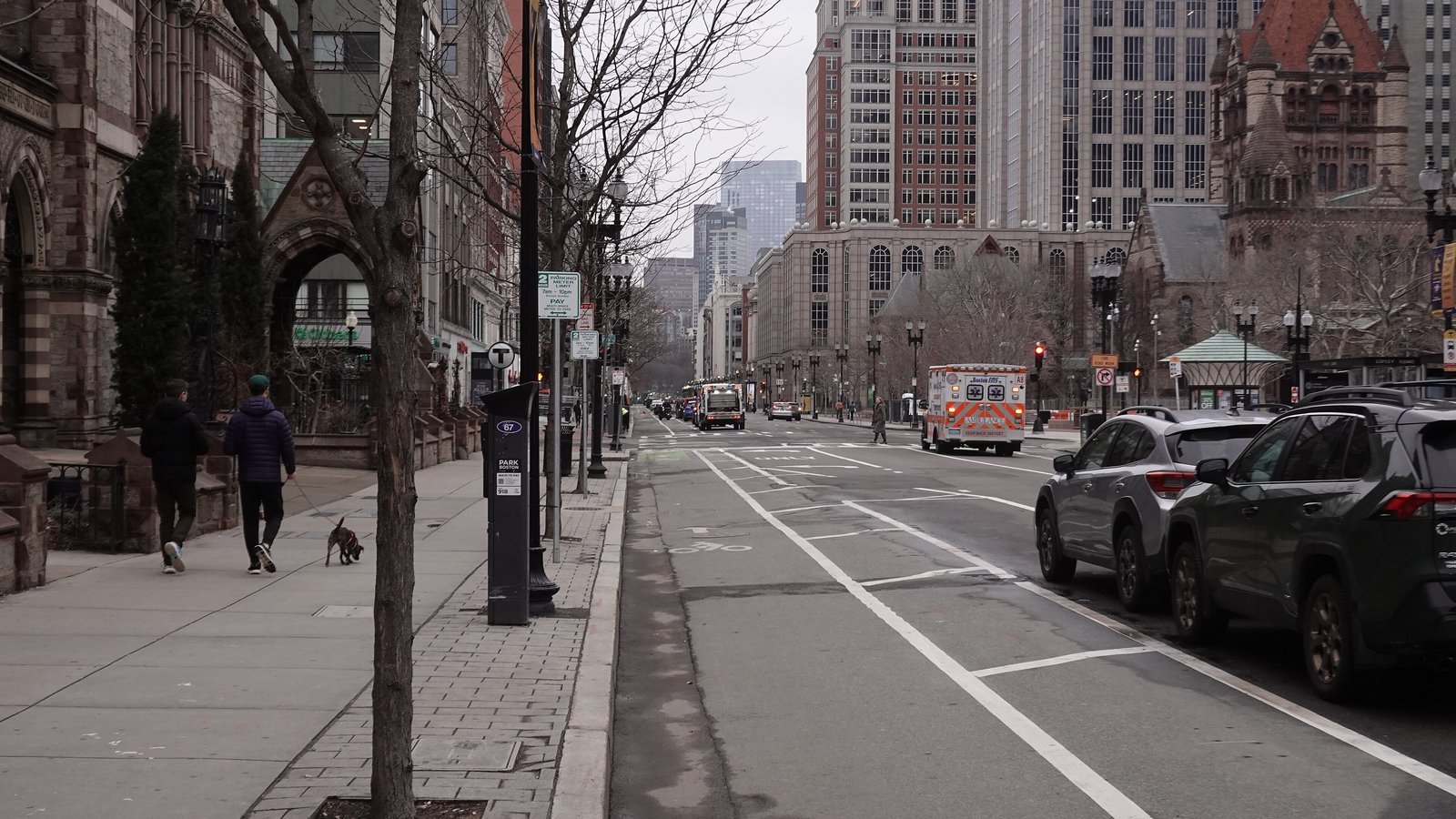
In August, frustrated activists used duct tape to mark a makeshift bike lane near the intersection where Gag was killed, and the city added an official bike lane and other safety changes there in October, the Globe reported. Mayor Michelle Wu has said the city plans more concrete barriers on bike lanes, and Boston has reinstalled protective posts on downtown bike lanes, according to the Globe.
Through a resolution, the Boston City Council is recognizing Nov. 15 as World Day of Remembrance for Road Traffic Victims in the city. The resolution cites 354 traffic deaths in Massachusetts in 2025, including 11 pedestrian deaths in Boston, and 75 pedestrians killed statewide as of October 2026. It urges the Legislature to authorize speed cameras and increase accountability for truck safety features, according to the city.
“There is no one policy or design solution that will eliminate traffic fatalities, but the Louisa Law would meaningfully, and measurably, get Massachusetts closer to that goal,” Brendan Kearney, executive director of WalkMassachusetts, told the Globe.
Remembrance events today
The Massachusetts Vision Zero Coalition lists World Day of Remembrance events on Sunday in Pittsfield at noon at Dorothy Amos Park and in New Bedford at 1:30 p.m. on Pope’s Island. Check the coalition’s event page for details before you go.
Sources
- The Boston Globe: ‘By and for Louisa.’ Lawmakers, advocates pushing street safety legislation in honor of late city planner (Nov. 13, 2026)
- WBUR: Mass. lawmakers plan to introduce ‘Louisa’s Law,’ a street safety bill in the wake of Boston cyclist’s death (Nov. 13, 2026)
- GBH News: Proposed Mass. bill honors safety advocate Louisa Gag, killed on bike by driver in Boston (Nov. 13, 2026)
- Streetsblog Massachusetts: Lawmakers Unveil ‘Louisa Law’ To Regulate Dangerous Drivers and Vehicles (Nov. 13, 2026)
- WCVB: Family of Boston transportation planner killed in crash backs Massachusetts traffic safety bill (Nov. 13, 2026)
- City of Boston: World Day of Remembrance for Road Traffic Victims (City Council resolution, updated Nov. 13, 2026)
- Massachusetts Vision Zero Coalition: World Day of Remembrance 2026 events