
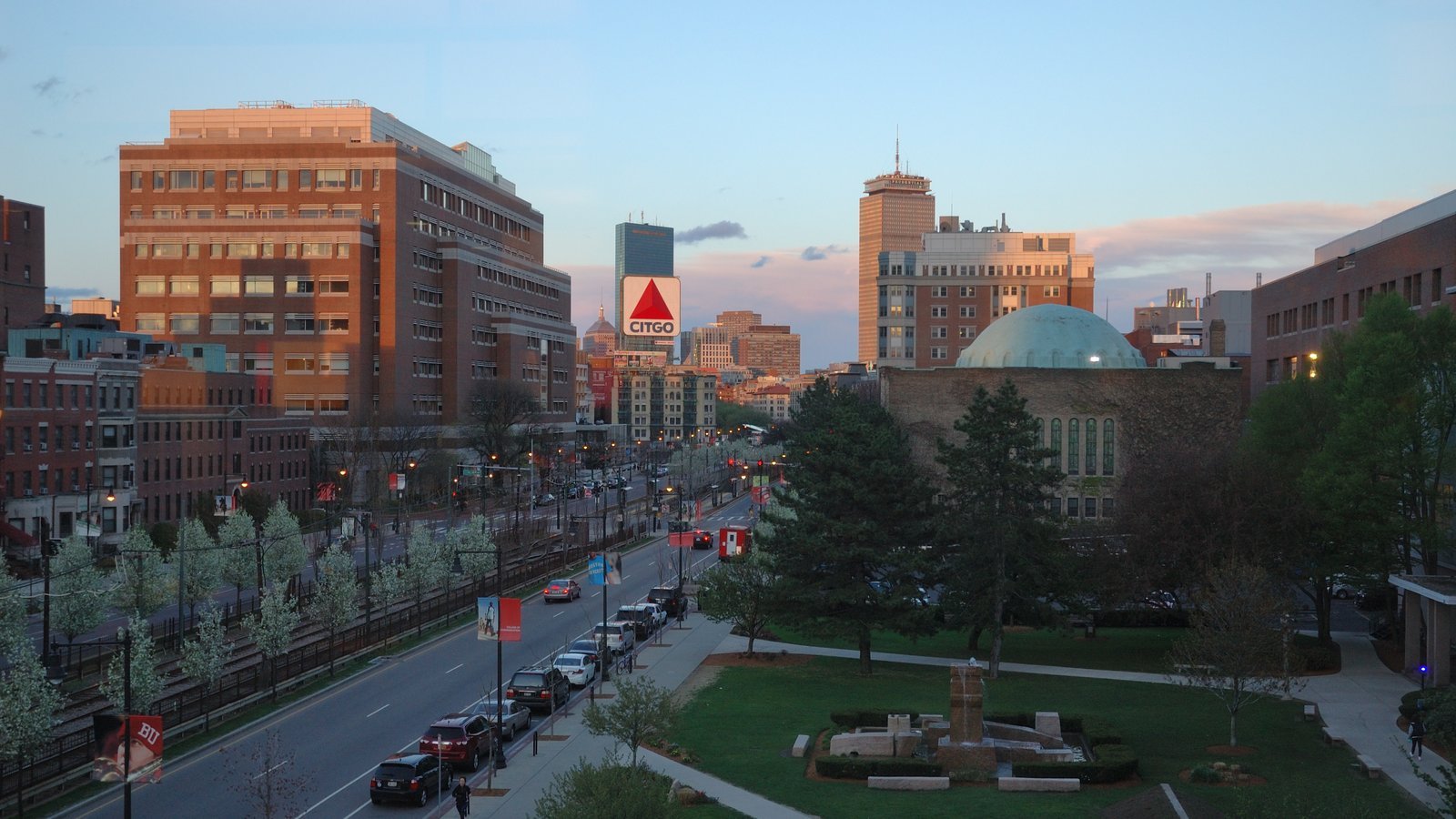
The public comment period on a proposed federal fee for international students who work in the U.S. during or after their studies closed on Monday, Nov. 9, with Boston University, a major New England business group and national higher education associations all urging the Department of Homeland Security to drop the plan.
What DHS proposed
The proposed rule, announced Oct. 7 and published in the Federal Register on Oct. 8, would require colleges certified by the Student and Exchange Visitor Program to pay $70,000 before recommending an F-1 student for Optional Practical Training for the first time, and $30,000 for any later OPT period, including the 24-month STEM extension. OPT lets international students work in their field for up to 12 months at each degree level. Today, students pay an application fee of about $500, BU Today reported.
DHS says the fees would combat fraud and abuse it has identified in the program, including “pay-to-stay” schemes, and would push schools to be more selective about whom they recommend. “Optional Practical Training was never meant to be a back door into the American workforce, a subsidy for cheap labor, or a prize for those who game the system,” a DHS spokesperson said in the department’s announcement. The fees would go to the U.S. Treasury, not to the program.
Boston University’s objection
In a letter to DHS, BU President Melissa Gilliam and Provost Colin Duckett wrote that “the reduced international enrollment resulting from the proposed rule would threaten the vibrancy of BU’s classrooms and laboratories.” They said about half of BU graduates using OPT work in Massachusetts, at employers including Boston Children’s Hospital, Lynn Community Health Center, the state Executive Office of Health and Human Services and VA Boston Healthcare System.
DHS has suggested schools could pass the cost on, but the BU leaders wrote that “few students could afford a $70,000 charge, and many employers would struggle to pay it on top of a new graduate’s wages.” Their letter cited the department’s own estimate that initial OPT participation would fall 27 percent, and eventually by as much as 50 percent.
A regional and national pushback
The Boston-based New England Council, which says it represents more than 600 businesses, colleges, health institutions and other organizations, told DHS that the fees would “weaken the talent pipeline that New England employers depend on.” For an employer, the group wrote, a passed-on fee could reach $100,000 per OPT hire. Citing NAFSA data, the council said Massachusetts has 84,097 international students who contribute $3.6 billion to the state economy and support 30,805 jobs.
The American Council on Education and 36 other higher education groups filed joint comments on Nov. 9 asking DHS to withdraw the rule entirely, saying the fees go far beyond the cost of processing applications. The Association of American Universities, which represents 71 leading research universities, argued that DHS lacks the legal authority to set the fees and that they “in effect, operate as a tax.” BU Today said the Presidents’ Alliance on Higher Education and Immigration, NAFSA and the Association of Independent Colleges and Universities in Massachusetts also opposed the plan.
What it means for students now
Nothing changes yet. MIT’s International Students Office tells students the fee is “only a proposed rule” and that there is nothing for them to do at this time. Under the proposal, students already on approved OPT or recommended before a final rule takes effect would not owe the new fee for that period. DHS must review the comments and publish a final rule, and BU says the department has proposed an effective date 60 days after that. “Litigation is likely to follow,” BU’s global programs office says. BU is holding online OPT workshops through December.
International students in Massachusetts are also watching a separate DHS rule that would end “duration of status” and set fixed admission periods. U.S. District Judge F. Dennis Saylor IV of the District of Massachusetts blocked that rule nationwide on Sept. 14, and The Tufts Daily reported that Tufts, with 2,441 international students as of fall 2025, is preparing in case the injunction is lifted.
What to watch
The next step is a final rule from DHS, which could change the fee amounts or drop them after reviewing comments. A separate comment period on the rule’s paperwork requirements runs through Dec. 7, according to the Federal Register notice.
Sources
- BU Today: BU Leaders Object to Proposed Fee for International Students Seeking US Work (Nov. 9, 2026)
- American Council on Education: ACE, Others Call on DHS to Withdraw Proposed OPT Fee Increase (Nov. 9, 2026)
- New England Council: Comment letter on Optional Practical Training Fees (Nov. 9, 2026)
- Association of American Universities: Comments on Optional Practical Training Fees (Nov. 9, 2026)
- Presidents’ Alliance on Higher Education and Immigration: Comments on DHS’s OPT Fee Proposed Rule (Nov. 9, 2026)
- The Tufts Daily: Tufts prepares for student visa rule change as injunction faces uncertainty (Nov. 9, 2026)
- U.S. Department of Homeland Security: DHS Proposes Fees for Foreign Student Work Program (Oct. 7, 2026)
- Federal Register: Optional Practical Training Fees, proposed rule (Oct. 8, 2026)
- MIT International Students Office: DHS Proposed Rule to Establish New F-1 Optional Practical Training Fees