
The United States has lost its measles elimination status, the Pan American Health Organization said Tuesday, after concluding that measles has been spreading continuously in the country for more than a year.
An independent commission reviewed the regional outbreak at a meeting in Washington from Nov. 10 to 13. After the commission’s assessment, which PAHO Director Dr. Jarbas Barbosa accepted, the agency said endemic transmission has been re-established in the United States, Mexico and Bolivia. Under the commission’s rules, that happens when the same measles virus genotype and lineage circulate without interruption for 12 months or more.
Barbosa said losing the status “is much more than losing a public health designation. It means the virus has circulated for a prolonged period, putting families and communities at risk of preventable illness, hospitalization and death.”
What the decision means
The United States first met the criteria for measles elimination in 2000. The designation did not mean measles never appeared again. It meant the country had stopped continuous local spread, so later cases were tied to travel or to short outbreaks that were contained. PAHO said the current U.S. outbreak period began Jan. 20, 2025, and crossed the 12-month threshold on Jan. 20, 2026.
The Americas as a region already lost its measles-free verification in November 2025 after sustained transmission in Canada. Canada has since interrupted that outbreak and is working to regain its status, PAHO said Tuesday.
The loss of national status does not mean every community is in an outbreak, PAHO said. To regain the designation, a country has to interrupt endemic transmission for 12 consecutive months. NBC News reported that PAHO officials said the United States is expected to submit a corrective plan in the coming weeks.
The national outbreak
The CDC said that as of Nov. 12, health departments had reported 5,412 confirmed measles cases in the United States this year, in 47 jurisdictions including Massachusetts. That is more than double the 2,289 confirmed cases recorded in all of 2025. Ninety-six percent of this year’s cases have been tied to outbreaks, including 1,385 cases from outbreaks that began in 2025.
The CDC’s Nov. 13 update listed 6 measles deaths in 2026. The agency said that number is subject to change and that it is working with state epidemiologists on a standard way to classify measles deaths. NBC News, citing state health departments, reported a higher toll of 10 deaths this year. News organizations have described the 2026 case count as the highest since 1991.
A large outbreak that began in Gaines County, Texas, in January 2025 was an early part of that wave. The Texas Department of State Health Services later said that outbreak infected 762 people, hospitalized 99 and killed two school-aged children, and that it was declared over in August 2025, the San Antonio Express-News reported.
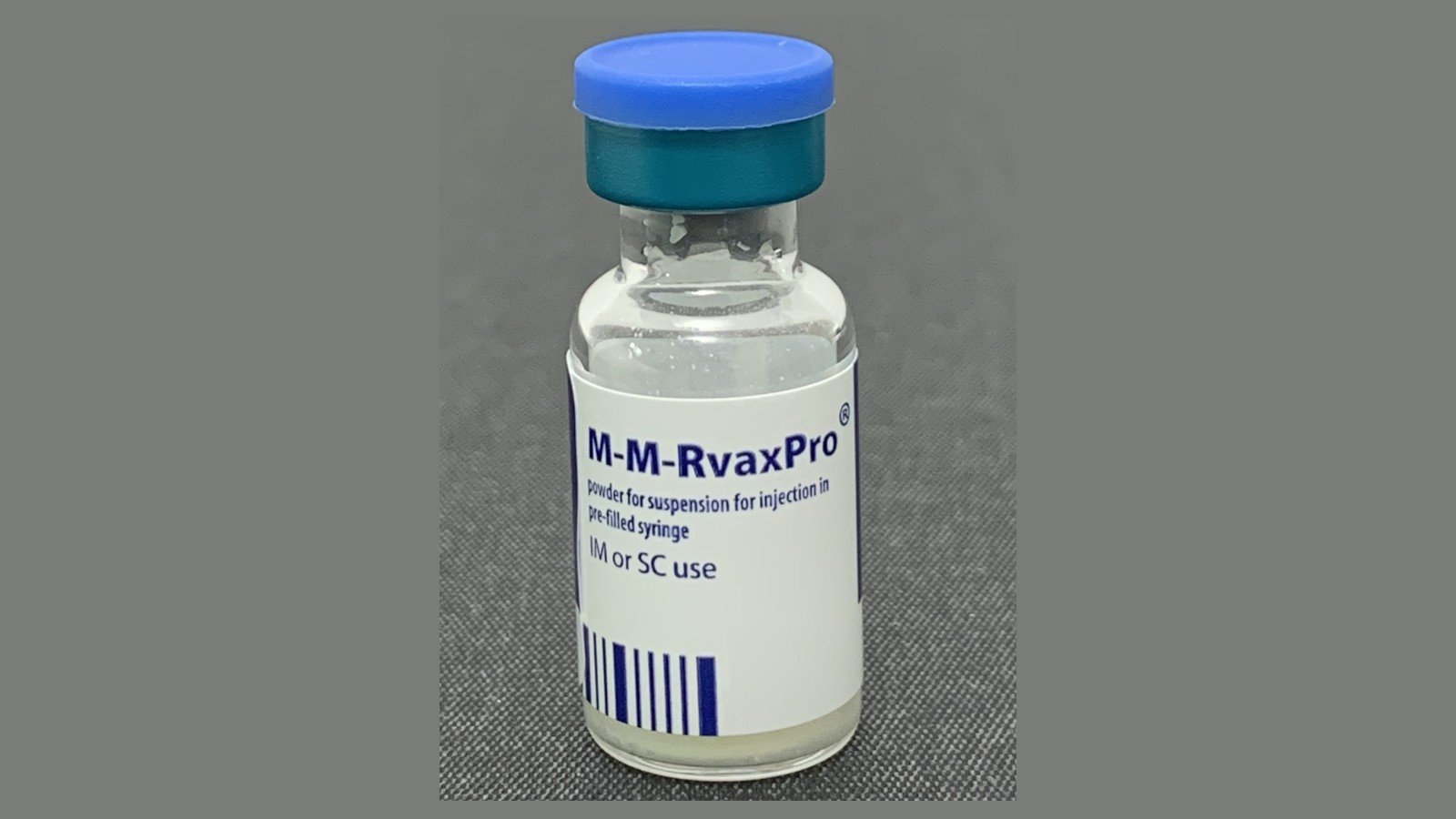
In a joint statement Tuesday, the CDC said it would encourage MMR vaccination, expand access to shots and help state and local health departments find and contain outbreaks. The agency said it has provided about $100 million since August to strengthen prevention and response. CDC Director Dr. Erica Schwartz said, “The measles elimination designation is not what protects Americans. Vaccination does.”
CDC data show MMR coverage among U.S. kindergartners fell from 95.2% in the 2019-2020 school year to 92.7% in 2023-2024. For 2025-2026, national kindergarten MMR coverage was about 92.4%, according to CDC figures reported by WBUR and compiled by KFF.
The Massachusetts picture
Massachusetts has not seen a large outbreak, but it has not been untouched. The state Department of Public Health’s vaccine-preventable disease table, current as of Nov. 3 and covering cases through Oct. 31, lists two measles cases in 2026 and none in 2025. The state recorded one case in 2024.
On Feb. 27, DPH announced the year’s first two confirmed cases in Massachusetts residents. One was a school-aged resident who was exposed and diagnosed out of state and remained out of state while infectious, with no known exposures in Massachusetts. The other was a Greater Boston adult who had recently returned from international travel and had an uncertain vaccination history. Officials said that person visited several locations while infectious and that they were notifying people who may have been exposed. There was no evidence of spread within Massachusetts at the time, the department said.
“Our first two measles cases in 2026 demonstrate the impact that the measles outbreaks, nationally and internationally, can have here at home. Fortunately, thanks to high vaccination rates, the risk to most Massachusetts residents remains low,” Public Health Commissioner Dr. Robbie Goldstein said then.
Even in 2025, when Massachusetts recorded no cases, people with measles passed through Greater Boston. In June, the Boston Public Health Commission and DPH said a person with measles visited the Westin Boston Seaport District Hotel, the Museum of Fine Arts and Logan Airport’s Terminal C. In December, DPH said an out-of-state visitor diagnosed with measles had been at Logan’s Terminal B and Terminal C and at a Westborough hotel.
Vaccination gaps closer to home
Statewide, Massachusetts kindergartners remain better protected than the national average. About 96.5% had received measles vaccine as of the 2025-2026 school year, according to state data reported by WBUR in October and in line with KFF’s compilation of CDC school survey figures. That is above the 95% coverage public health agencies often cite as needed to help prevent sustained spread.
The protection is uneven. WBUR, reviewing DPH school immunization data for 2025-2026, reported that 94.2% of kindergartners in Suffolk County, which includes Boston, were vaccinated against measles, below that 95% mark. The rate was 89.7% in Franklin County and 91.2% on Martha’s Vineyard. In some schools, WBUR reported, 1 in 5 kindergartners had not received measles shots.
DPH said April 5 that 1.8% of Massachusetts kindergartners had a medical or religious exemption in 2025-2026, including 0.7% in Suffolk County, 5.1% in Franklin County and 9.6% in Dukes County, which includes Martha’s Vineyard.
“With soaring measles activity in the U.S. and abroad, it is likely that measles will be introduced into Massachusetts,” DPH spokesperson Ann Scales told WBUR in October. “We are fortunate to have an overall very high rate of measles vaccination in Massachusetts but acknowledge that there are undervaccinated pockets where an outbreak of limited size could occur.”
Dr. David Lyczkowski, president of the Massachusetts chapter of the American Academy of Pediatrics, told WBUR he was watching the outbreak in Pennsylvania. “I’m worried that it’s just a matter of time before we see an outbreak,” he said.
Measles is among the most contagious respiratory viruses. PAHO says one infected person can spread it to as many as 18 people who are not immune. It can cause pneumonia, encephalitis and death. Two doses of MMR vaccine are about 97% effective at preventing measles, according to Boston and state health officials.
DPH recommends that children get the first MMR dose at 12 to 15 months and a second dose before or during the early school years. Adults should have at least one dose, and international travelers, health care workers and college students should have two. People who may have been exposed and develop symptoms are asked to call a health care provider before walking into a clinic or emergency department.
Sources
- PAHO: PAHO urges countries to step up efforts to stop measles outbreaks and move towards elimination in the Americas (Nov. 17, 2026)
- PAHO: Measles in the Americas: Questions and Answers (Nov. 17, 2026)
- CDC Newsroom: Joint Statement: Loss of U.S. Measles Elimination Status (Nov. 17, 2026)
- CDC: Measles Cases and Outbreaks (updated Nov. 13, 2026)
- NBC News: U.S. loses measles-elimination status, erasing decades of progress (updated Nov. 17, 2026)
- San Antonio Express-News: The U.S. has lost its measles elimination status. Here’s how Texas played a role (Nov. 17, 2026)
- Massachusetts DPH: State public health officials announce first two confirmed measles cases in Massachusetts this year (Feb. 27, 2026)
- Massachusetts DPH: Vaccine-preventable diseases (data current as of Nov. 3, 2026, cases through Oct. 31)
- Massachusetts DPH: School Immunizations (exemption data current as of April 5, 2026)
- City of Boston / Boston Public Health Commission: Person with Measles Visited Boston (June 2025, page updated Jan. 13, 2026)
- Massachusetts DPH: State public health officials alert residents about potential exposure to measles in multiple locations (Dec. 24, 2025)
- WBUR: Measles is surging in the U.S., and doctors warn Massachusetts could be at risk (Oct. 6, 2026)
- KFF State Health Facts: Vaccination Coverage Rates among Kindergartners (2025-2026)