
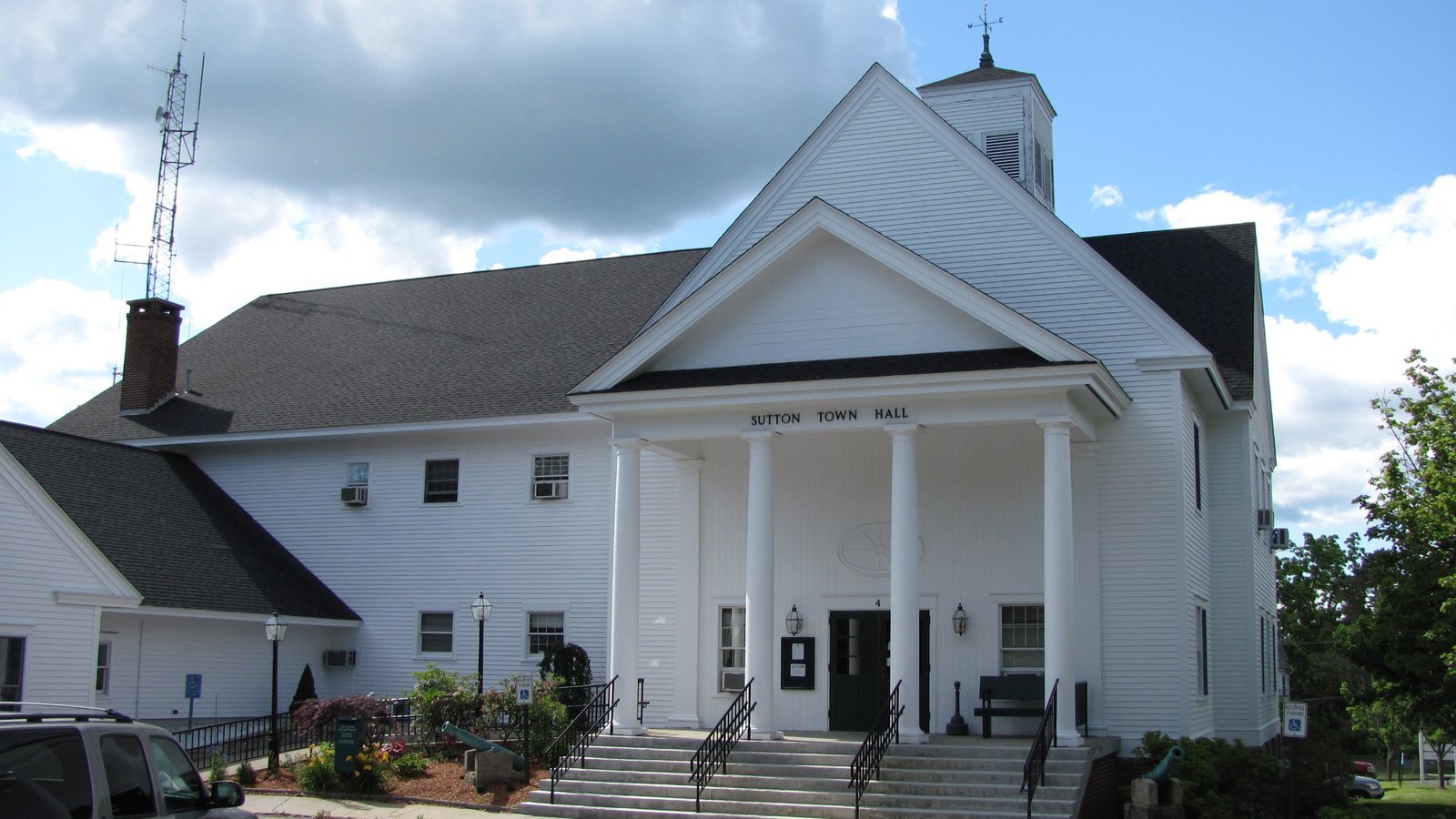
Officials in Sutton say they will keep studying a proposal from the Kraft Group to build one of the largest data center campuses in the country in the Central Massachusetts town, despite a wave of resident opposition this week.
In an unsigned statement posted Friday, Nov. 13, the town said the proposal is preliminary and that “considering an opportunity is not the same as supporting it.” Data centers are not an allowed use under Sutton’s zoning bylaws, no formal application has been submitted and no project has been approved, the statement said.
What is proposed
Town Manager Austin Cyganiewicz outlined the plan in a memo to the five-member Select Board on Monday, Nov. 9, The Boston Globe reported. The campus would have 10 buildings on land owned by Unified Global Packaging Group, a Kraft company, off Boston and Providence roads about 10 miles south of Worcester.
Each building would be roughly 250,000 square feet, about 2.5 million square feet in all, and the campus would need about 900 megawatts of electricity at full build-out, according to the town’s preliminary review as reported by NBC10 Boston. News reports have put the investment at about $16 billion; the town’s review lists about $16.75 billion. Under the initial plan, the first two buildings would open in 2029, with two more each year through 2033, CBS Boston reported.
The site is a 383-acre parcel that was once a cement factory and gravel pit, according to the Globe. If completed, the campus would rank as the fourth-largest data center in the country, State House News Service reported in a story published by WBUR.
Developers told the town they are in talks with regional grid operator ISO New England about securing power and are exploring treated wastewater for cooling, CBS Boston reported.
The money question
The town’s interest is tied to its finances. Cyganiewicz’s memo projects about $27.8 million a year in tax revenue once the campus is complete, close to the town’s entire 2027 tax levy of $32 million, according to CBS Boston. The memo estimated the average single-family tax bill would drop by about $2,300 in fiscal 2031 and about $5,800 in fiscal 2035.
Without new revenue, Sutton faces a budget gap of about $350,000 in the fiscal year that starts in July, growing to $2.5 million the following year and about $10 million by 2033, the Globe reported. Town officials have pointed to Proposition 2½, which generally bars towns from raising property tax revenue by more than 2.5 percent a year, excluding new growth, unless voters approve.
Residents push back
More than 100 residents packed a Select Board meeting on Tuesday night, Nov. 10, to raise concerns about electricity and water use, noise and other effects on the rural town, the Globe reported. Sutton resident Candice Edwards started a Facebook group that had nearly 400 members by Friday. “The decisions being made today are going to impact our children’s future tomorrow,” she told the Globe.
In a statement to the Globe on Thursday, the Kraft Group called the project “an opportunity to bring meaningful long-term economic investment to Sutton” and said it “will only move forward if the community and the Town of Sutton want it.”
What happens next
Allowing data centers would take a zoning amendment drafted through a public process with Planning Board hearings, then approval by two-thirds of Town Meeting voters present and voting, according to the town. Cyganiewicz told the Globe that vote would likely come in May 2027.
The town says its review will cover grid capacity, water, noise, environmental impacts, public safety, traffic and the fiscal effect on Sutton, with findings posted at suttonma.gov/datacenter. It also said no town officials have signed nondisclosure agreements about the proposal.
A statewide ballot push
Separately, the Committee to Restrict Data Centers announced a campaign Thursday for a 2028 statewide ballot question, WBUR reported. The measure, certified by Attorney General Andrea Campbell’s office in September as Petition 26-08, would require a two-thirds vote of residents in a host community before a new data center or an expansion could go forward.
It would also bar a municipal permit unless the facility’s electricity supplier agreed not to shift costs onto other customers and committed to supplying enough power from 100 percent renewable sources. Water suppliers would have to certify that existing systems could serve the facility without materially affecting current customers.
The petition would apply to facilities with 5 megawatts or more of peak annual demand, a lower bar than the 25-megawatt threshold in Gov. Maura Healey’s Sept. 8 executive order on large data centers, according to WBUR. The committee is chaired by political consultant Jim Fleming, and state Sen. John Velis, a Westfield Democrat, is promoting it. Fleming said organizers will skip this month’s signature deadline and aim for next fall.
Voters favored data center restrictions in 40 of 41 local ballot contests on this month’s Election Day, WBUR reported, citing Ballotpedia.
Sources
- The Boston Globe: Kraft Group’s data center proposal ignited a firestorm of criticism, but Sutton officials say they’re not backing away (Nov. 13, 2026)
- WBUR / State House News Service: Ballot question would put major restrictions on data centers, as Kraft Group proposes Sutton data campus (Nov. 13, 2026)
- NBC10 Boston: Sutton shares why it’s considering huge Kraft-backed data center proposal (Nov. 13, 2026)
- CBS Boston: Mega data center proposed by Kraft Group getting “good-faith consideration,” town of Sutton says (Nov. 13, 2026)
- CBS Boston: 900-megawatt data center campus proposed for central Massachusetts, backed by Kraft Group (Nov. 10, 2026)