
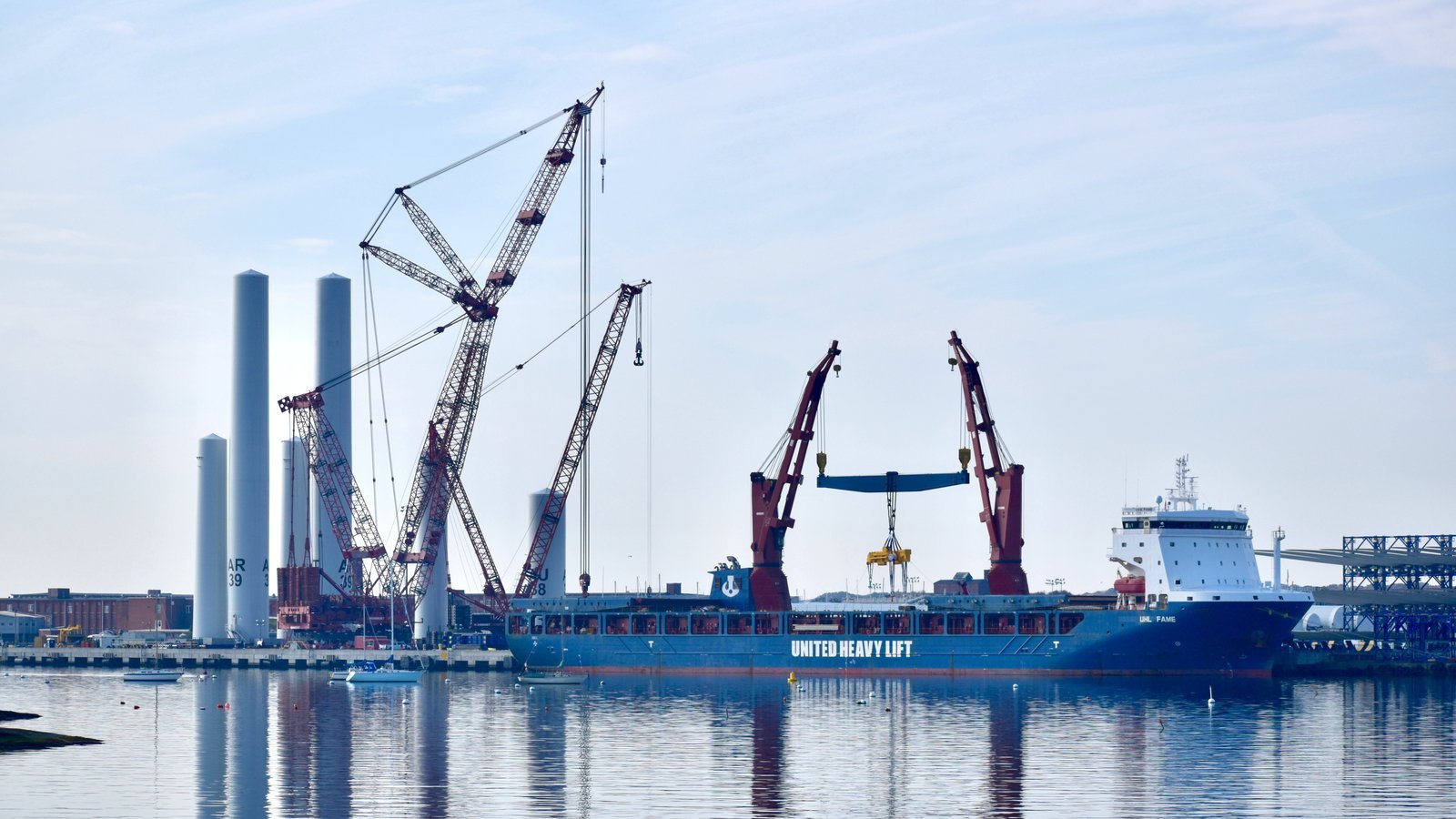
New England heads into winter with two large offshore wind farms fully running for the first time. Vineyard Wind 1, the country’s largest offshore wind project to be federally permitted and built, reached full commercial operations on Oct. 29, WBUR reported Friday.
“On Thursday, October 29, Vineyard Wind 1 reached full commercial operations, further strengthening New England’s energy supply,” spokesperson Craig Gilvarg said in a statement quoted by WBUR and the Martha’s Vineyard Times. The news came just hours after Revolution Wind, off Rhode Island, announced it had reached full power.
What “full operation” means
A wind farm reaches full commercial operations when every turbine has been commissioned, or tested, and is online, the Martha’s Vineyard Times explained. Both projects had been sending power to the grid for months at reduced levels. Vineyard Wind finished installing its turbines in March, and Revolution Wind finished in September, according to The New Bedford Light.
Vineyard Wind’s 20-year contracts with National Grid, Eversource and Unitil took effect in April. Power from commissioned turbines has been sold since then at an average fixed price of $69.50 per megawatt-hour, the Vineyard Times reported.
Why it matters for Massachusetts
The six New England states have no oil or gas reserves and little open land for large solar or onshore wind farms, which is why offshore wind sits at the center of regional energy plans, WBUR noted. Vineyard Wind delivers its power to Massachusetts. Revolution Wind delivers to Rhode Island and Connecticut.
Gov. Maura Healey called the milestone “an important boost” for the regional grid. “Vineyard Wind has already saved Massachusetts families and businesses millions of dollars on their electricity bills,” she said in a statement quoted by WBUR. “We are in for a difficult winter and wind will help with costs and reliability,” Katie Segal of the Environmental League of Massachusetts told the station.
Clean energy advocates said the two projects would cut 1.6 million metric tons of carbon pollution a year, which they compared to taking 325,000 cars off the road, The New Bedford Light reported.
A long, rocky build
Massachusetts picked Vineyard Wind in its first offshore wind auction in 2018. In 2024, a faulty turbine blade snapped and much of the debris washed up on Nantucket, triggering a federal investigation. In late December 2025, with the project 95% complete, the Trump administration issued stop-work orders to it and four other projects under construction. The Interior Department said the projects posed a national security threat, but several federal judges disagreed and the work resumed, WBUR reported. The $4.5 billion project employed about 3,500 people.
The project also fought with its turbine supplier. In May, Vineyard Wind said in court filings that it was producing “less than half of its expected capacity” and that 36 of its 62 turbines were not spinning, according to The New Bedford Light. That lawsuit against GE Vernova settled in September.
What to watch this winter
Vineyard Wind produced 336,382 megawatt-hours from July through September, enough for roughly 193,300 Massachusetts homes, by The New Bedford Light’s analysis of federal data. Revolution Wind produced 314,321 megawatt-hours over the same period.
Roger Williams University engineering professor Gordon Stewart told the paper that the 400,000-home estimate implies the farm will run at about 50% of its maximum output on average. Most offshore wind farms fall between 40% and 50%, the paper reported. Stewart said next quarter’s numbers, from New England’s windiest season, will be especially revealing. “We’re going to learn a lot from these first two large-scale farms,” Stewart said.
Beyond these two projects, the outlook for U.S. offshore wind remains uncertain. A federal permitting pause has frozen progress on all but five projects that were already under construction, and a permitting reform bill in Congress is still being negotiated, WBUR reported.